The LR41 battery’s direct equivalents are AG3, 192, 92A, LR736 and L736 (all 1.5V alkaline). The silver-oxide version is the SR41 (also sold as 384, 392 or SG3), which lasts longer and holds a steadier 1.55V. Any 7.9mm × 3.6mm, 1.5V button cell will fit an LR41 slot.
Your digital thermometer suddenly stops working. Your favourite watch won’t turn on. You open the battery compartment and find a tiny button cell marked LR41 but when you search online, you’re faced with confusing names like AG3, SR41, 392, 192, and LR736. Are they all the same? This guide clears up the confusion with a simple cross-reference table and plain-English advice.
I remember running into the same confusion the first time I needed to replace an LR41 battery. I wasn’t sure whether these different model numbers referred to the same battery, or if choosing the wrong one could damage my device.
My Experience with LR41 Batteries
When my daughter’s digital thermometer stopped working during the monsoon season, I rushed to a local medical shop in Maharashtra. They didn’t have “LR41” in stock, but the shopkeeper handed me an AG3 pack instead. Honestly, I was hesitant at first, but after trying it, the thermometer worked perfectly. Later, I learned that AG3 is a true alkaline equivalent of LR41. Since then, I always keep a pack of SR41 silver-oxide batteries as backups they last longer, and in our humid climate, reliable spares are a lifesaver.
Let’s break down all the best LR41 replacements so you can choose the right one without the guesswork.
If you’re unsure whether LR41 or LR44 is right for your device, check out our complete guide on the difference between LR41 and LR44 batteries to make an informed choice.
LR41 battery equivalents: full cross-reference table
This is the quickest way to find your replacement. Every code below shares the same 7.9mm × 3.6mm size and fits the same devices. The only real difference is chemistry (alkaline vs silver-oxide):
| Battery code | Chemistry | Voltage | Same as LR41? | Notes |
| LR41 | Alkaline | 1.5V | — (original) | The standard alkaline cell |
| AG3 | Alkaline | 1.5V | Yes (direct) | Cheapest, most common |
| 192 | Alkaline | 1.5V | Yes (direct) | Widely available |
| 92A | Alkaline | 1.5V | Yes (direct) | Same cell, different label |
| LR736 / L736 | Alkaline | 1.5V | Yes (direct) | Regional name (Panasonic) |
| G3 / GP192 | Alkaline | 1.5V | Yes (direct) | Japanese / GP labels |
| SR41 / SR41SW | Silver-oxide | 1.55V | Yes (upgrade) | Lasts longer, steadier voltage |
| 384 | Silver-oxide | 1.55V | Yes (upgrade) | Energizer silver-oxide code |
| 392 / 392A | Silver-oxide | 1.55V | Yes (upgrade) | Energizer/Duracell code |
| SG3 / SR736 | Silver-oxide | 1.55V | Yes (upgrade) | Silver-oxide labels |
What Is an LR41 Battery?
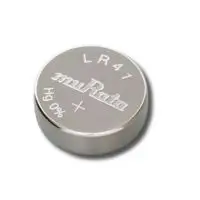
The LR41 is a small 1.5V alkaline button cell used in compact, low-drain electronics. Here are its key specs:
| Feature | Specification |
| Voltage | 1.5V (nominal) |
| Size | 7.9 mm diameter × 3.6 mm height |
| Chemistry | Alkaline |
| Capacity | ~25–32 mAh |
| Shelf life | 2–3 years (alkaline) |
| Type | Primary (non-rechargeable) |
Alkaline vs Silver-oxide: Which LR41 Equivalent Should You Choose?
When it comes to LR41 battery equivalents, alkaline and silver-oxide are the two main chemistries. Understanding the differences between AA and AAA batteries can also provide insights into battery chemistries and their applications.
This is the most important choice. The two main chemistries behave differently:
- Alkaline (AG3, 192, 92A, LR736): affordable and fine for low-drain devices like toys, calculators and remotes. Voltage slowly drops over time, and shelf life is around 2–3 years.
- Silver-oxide (SR41, 384, 392): costs a little more, but holds a steady 1.55V right up to the end and lasts longer (often 5+ years on the shelf). Best for watches, thermometers and medical or precision devices that need stable voltage.
Simple rule: for accurate, sensitive devices choose silver-oxide (SR41/392). For cheap everyday gadgets, alkaline (AG3) is perfectly fine.
| Feature | Alkaline (LR41/AG3) | Silver-oxide (SR41/392) |
| Voltage | 1.5V, drops over time | 1.55V, stays stable |
| Lifespan | Shorter | Longer |
| Shelf life | 2–3 years | 5+ years |
| Cost | Cheaper | Slightly pricier |
| Best for | Toys, calculators, remotes | Watches, thermometers, medical |
Wondering how SR41 stacks up against LR41? Our detailed SR41 vs LR41 comparison covers performance, chemistry, and usage differences to help you decide.
What is NOT an LR41 equivalent (avoid these mistakes)
Some button cells look similar but are not interchangeable. Using the wrong one can give bad readings or not fit at all:
- LR44 / AG13 / A76: bigger (11.6mm × 5.4mm). It will not fit an LR41 slot. A common mix-up — check the size.
- 357 / SR44: also LR44-sized silver-oxide; not an LR41 replacement.
- 377 / SR626SW: smaller (6.8mm × 2.6mm); used in smaller watches, not LR41 devices.
Always match both the size (7.9mm × 3.6mm) and the voltage (1.5–1.55V) before swapping.
Best battery for hearing aids: why AG3 isn’t ideal
A quick but important note: while AG3/LR41 cells physically fit some hearing-aid testers, true hearing aids usually need zinc-air 312 batteries (also labelled PR41, A312, PR312). Zinc-air cells offer a much higher capacity (around 180 mAh) designed for the constant draw of a hearing aid.
If your device is an actual hearing aid, use the zinc-air type your manufacturer recommends rather than a standard LR41 equivalent.
How to test an LR41 or SR41 battery with a multimeter
Not sure if your old battery is dead or your new one is good? A quick multimeter check takes 30 seconds:
- Set your multimeter to measure DC voltage, on the 2V or 20V range.
- Wipe the battery clean — dirt or corrosion can give a false reading.
- Touch the red (positive) probe to the flat side and the black (negative) probe to the domed side.
- Read the voltage: a healthy LR41 shows close to 1.5V (1.55V for SR41). Below about 1.2V, the battery is flat and should be replaced.
Tip: the flat face of an LR41 is the positive (+) side, and the domed end is negative (–). Match this to the markings in your device.
How to choose the right LR41 equivalent
When picking a replacement, check three things:
- Voltage: aim for 1.5V (alkaline) or 1.55V (silver-oxide). Both work in most LR41 devices.
- Size: must be 7.9mm diameter × 3.6mm height to fit correctly.
- Chemistry: silver-oxide (SR41) for sensitive or high-use devices; alkaline (AG3) for cheap everyday gadgets.
Trusted brands for LR41 equivalents
To avoid leaks and device damage, stick to reputable brands: Energizer, Renata, Maxell, Sony, Murata, Duracell and Panasonic. These offer consistent quality and are easy to find in stores or online (Amazon India, Flipkart). Avoid unbranded bulk packs for medical or precision devices.
Common devices that use LR41 batteries
Despite their tiny size, LR41 cells power a wide range of everyday gadgets:
- Digital thermometers — the most common household use, especially with kids.
- Watches and clocks — many analog and digital watches.
- Laser pointers — for presentations or pet toys.
- Calculators — compact and pocket models.
- Medical devices — glucose meters and testers.
- Toys and gadgets — keychain lights, musical toys, small games.
- Cameras — some older film cameras use them for exposure meters.
Personal tip: I’ve replaced LR41 batteries in my child’s digital thermometer and in a mini laser pointer I use for presentations. In both cases, the silver-oxide SR41 alternative lasted noticeably longer, saving me multiple replacements.
Conclusion
Finding an LR41 battery replacement doesn’t have to be confusing. Once you understand which batteries are true equivalents and which differ in chemistry, choosing the right replacement becomes much easier.
The next time you see model numbers like AG3, LR736, 192, or SR41, you’ll know exactly what they mean and can confidently pick the best battery for your device. A few minutes of checking compatibility can save you time, money, and unnecessary replacements.
FAQs for LR41 Battery Equivalents
-
What is the best equivalent for an LR41 battery?
The best equivalents include AG3 (alkaline), 192 (alkaline), and SR41SW (silver-oxide). Your choice depends on your device’s requirements—use silver-oxide for high-drain devices.
-
Can I use SR41 instead of LR41?
Yes! SR41 is a silver-oxide equivalent of LR41. It has a slightly higher voltage (1.55V) and lasts longer, making it ideal for high-drain devices.
-
What devices use LR41 batteries?
evices like digital thermometers, watches, calculators, and laser pointers commonly use LR41 batteries.
-
How long does an LR41 battery last?
Alkaline versions typically last 2-3 years, while silver-oxide equivalents can last 5+ years, depending on usage and storage conditions.
-
What is the difference between LR41 and SR41?
The main difference is chemistry: LR41 is alkaline, while SR41 is silver-oxide. SR41 lasts longer and provides stable voltage, making it better for high-performance devices.