Introduction
Imagine receiving an alert that someone entered your property at night. You quickly check the security footage, only to find a blurry image that makes it impossible to identify the person. At that moment, the type of security camera you chose suddenly becomes very important.
This is exactly why the debate between digital vs analog security cameras continues today. While both systems are designed to monitor and protect your property, they differ significantly in image quality, storage, remote access, installation, and overall performance. Digital security cameras generally offer higher-resolution video and advanced smart features, while analog cameras remain popular for their simplicity and lower upfront cost.
When I first started comparing security camera systems, I assumed all cameras recorded footage the same way. However, after exploring different setups, I quickly realized that the difference between a clear 4K video and a grainy recording can have a major impact when reviewing important footage.
In this guide, I’ll compare digital and analog security cameras, explain their key differences, and help you decide which option is the best fit for your home or business security needs.
What Are Digital and Analog Security Cameras?
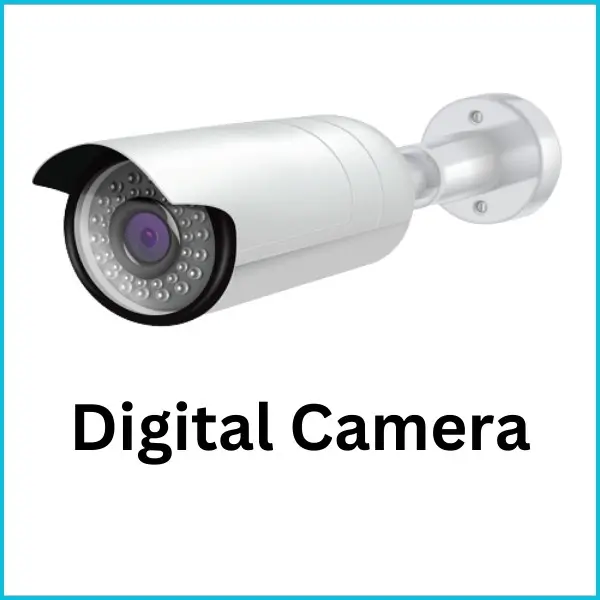
Digital Security Cameras
These cameras use Internet Protocol (IP) to transmit footage digitally. They are known for their high-quality resolution and advanced features like remote monitoring.
- Send digital video via LAN/Wi‑Fi directly to NVR or cloud—no DVR needed.
- Support high definition—HD, 4K, even 5 MP—with AI-powered analytics, remote access, and scalability.
Analog Security Cameras
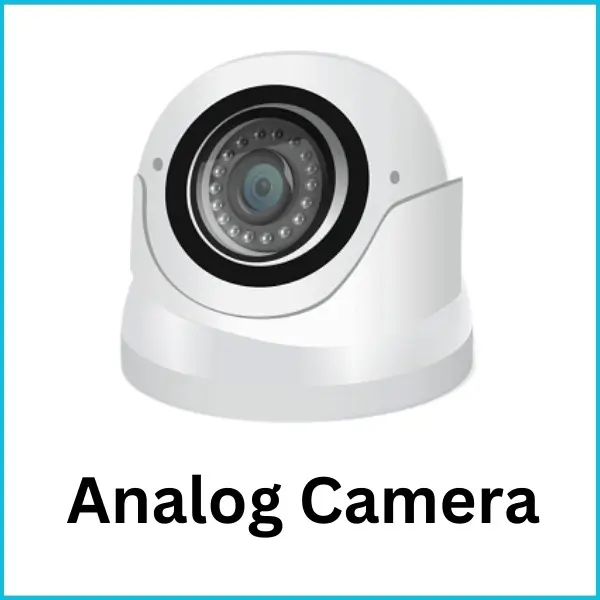
These traditional cameras use coaxial cables to transmit footage. While they’re budget-friendly, they lack the advanced features of their digital counterparts.
- Use a coaxial cable + DVR for video transmission.
- Represent stable, cost-effective choices for standard CCTV needs, but video typically maxes out at SD or 720p quality.
Differences Between Digital and Analog Security Cameras
| Feature | Digital Cameras (IP) | Analog Cameras |
|---|---|---|
| 1. Image Quality | HD and 4K resolution | Lower resolution |
| 2. Installation | Ethernet cables (PoE) | Coaxial cables |
| 3. Storage Options | Cloud or NVR-based storage | DVR-based storage |
| 4. Cost | Higher upfront, lower maintenance | Budget-friendly upfront |
| 5. Scalability | Easy to expand | Limited scalability |
| 6. Connectivity | Wireless options available | Requires wired connections |
| 7. Features | AI, remote access, motion detection | Basic functionalities |
1. Image Quality
Digital cameras offer crystal-clear footage in HD or 4K resolution, making it easy to identify faces and objects. Analog cameras, while reliable, are limited to standard resolution.
2. Installation Process
Digital cameras use Ethernet cables (PoE), simplifying installation and eliminating the need for multiple wires. Analog cameras rely on coaxial cables, which can be cumbersome.
3. Storage Options
Digital cameras store footage on cloud servers or NVRs, providing scalability. Analog systems depend on DVRs, which have limited storage capacity.
4. Cost
Analog cameras are more affordable upfront but may incur higher maintenance costs. Digital systems are costlier initially but save money in the long run with minimal upkeep.
5. Scalability
Digital systems are highly scalable, making them perfect for growing businesses. Analog systems have limited scalability and are best for smaller setups.
6. Connectivity
Wireless connectivity is a key advantage of digital cameras, allowing for flexible installation. Analog systems are restricted to wired setups.
7. Features and Advanced Technology
Digital cameras boast features like AI-powered motion detection and remote monitoring. Analog systems offer basic functionality without smart capabilities.
Choosing the Right System
| Use Case | Best Option | Why It’s Ideal |
|---|---|---|
| Home & DIY | Digital | Easy PoE/Wi‑Fi install, app access |
| Small Business | Hybrid | Combine analog legacy with digital features |
| Enterprise / Campus | Digital IP + PoE | Scalable, AI, remote management |
When looking for a security camera system, I initially focused only on price. Analog cameras seemed like the obvious choice because they were more affordable. However, after comparing footage from both systems, I noticed that digital cameras captured far more detail, especially when zooming in on faces, vehicles, or movement in low-light conditions.
Conclusion
Choosing between a digital and analog security camera isn’t just about technology—it’s about how much protection and peace of mind you want. Analog cameras can still be a budget-friendly option for basic surveillance, but digital cameras offer sharper video, remote access, and smarter security features that are increasingly important today.
If there’s one thing I’ve learned, it’s that the best security camera is the one that gives you clear answers when something unexpected happens. When every detail matters, image quality can make all the difference.
FAQs
-
Which camera type is better for face recognition?
Digital/IP cameras with ≥1080p and AI analytics are best suited for face recognition.
-
Can analog cameras still be used in 2025?
Yes. HD analog (TVI/AHD) is cost-effective great for basic, local recording.
-
Is PoE necessary for digital cameras?
No, but PoE simplifies installation by combining power and data in one cable.
-
How do I protect IP cameras from hacking?
Secure them with strong passwords, firmware updates, encryption (WPA2/WPA3), and network segregation.