Table of Contents
Introduction
Drones have quietly become one of the most important technologies shaping modern warfare.
What began as small unmanned aircraft used for surveillance has evolved into sophisticated systems capable of long-range reconnaissance, intelligence gathering, and precision strikes. Among the countries that have invested heavily in this technology is Iran.
Despite facing decades of economic sanctions and limited access to Western military equipment, Iran has managed to build a significant drone program. Today, analysts consider it one of the most extensive UAV programs in the Middle East.
Instead of relying on expensive fighter jets, Iran focused on developing relatively affordable unmanned aerial vehicles (UAVs) that can perform multiple military roles. Over time, this strategy allowed the country to build a diverse fleet of drones capable of operating across long distances.
In this article, I explore how Iran developed its drone technology and examine some of the drones that helped it become a major drone power.
🎥 Watch this quick YouTube Short showcasing Iran’s most powerful military drones and their capabilities in modern warfare.
In just a few seconds, you’ll see why Iran’s drone technology is gaining global attention.
The Origins of Iran’s Drone Program
Iran’s drone development dates back to the Iran–Iraq War in the 1980s. During this period, the country needed new ways to monitor enemy troop movements and gather battlefield intelligence.
Engineers began experimenting with simple unmanned aircraft that could carry cameras and transmit reconnaissance images.
Although these early drones were relatively basic, they marked the beginning of Iran’s UAV development.
Over the following decades, Iran continued investing in aerospace research and domestic manufacturing. According to research from the United States Institute of Peace, the country gradually expanded its drone fleet through military research programs and local engineering efforts.
How Sanctions Encouraged Domestic Innovation
International sanctions limited Iran’s ability to purchase advanced military aircraft and weapons systems from abroad. As a result, the country focused on developing its own technology.
Instead of importing expensive fighter jets, Iran invested heavily in:
- domestic aerospace engineering
- locally manufactured drone components
- reverse engineering of foreign technology
One widely reported incident occurred in 2011 when Iran captured a U.S. reconnaissance drone called the RQ-170 Sentinel.
Iranian engineers later studied the drone’s design and developed similar platforms such as the Shahed-171 Simorgh.
While analysts debate the extent of technology transfer, the event demonstrated how Iran has used reverse engineering to advance its aerospace capabilities.
Key Drones That Strengthened Iran’s Military
1. Shahed-136 Loitering Munition
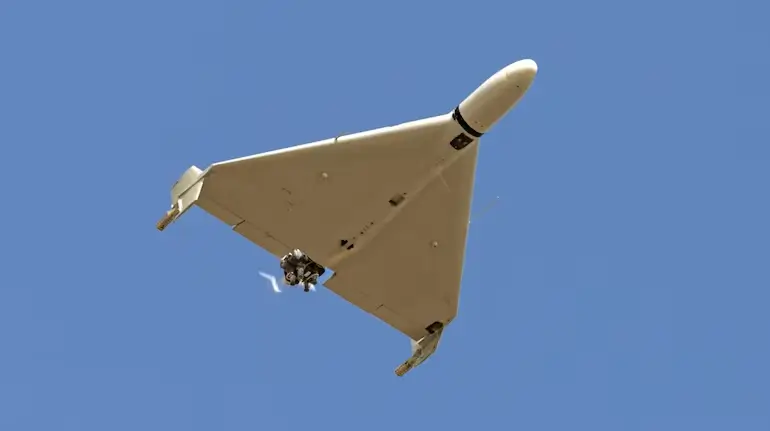
One of the most widely known Iranian drones is the Shahed-136, often described as a loitering munition.
Unlike traditional drones that return to base after a mission, the Shahed-136 is designed to fly toward a target and explode on impact.
Key Specifications
| Feature | Details |
|---|---|
| Type | One-way attack drone |
| Estimated range | 2,000–2,500 km |
| Speed | Around 185 km/h |
| Warhead | Approximately 30–50 kg |
Because of its relatively simple design, the drone can be produced at a lower cost compared with many missiles. This allows multiple drones to be launched toward a target, making defense more challenging.
2. Mohajer-6 Surveillance and Strike Drone
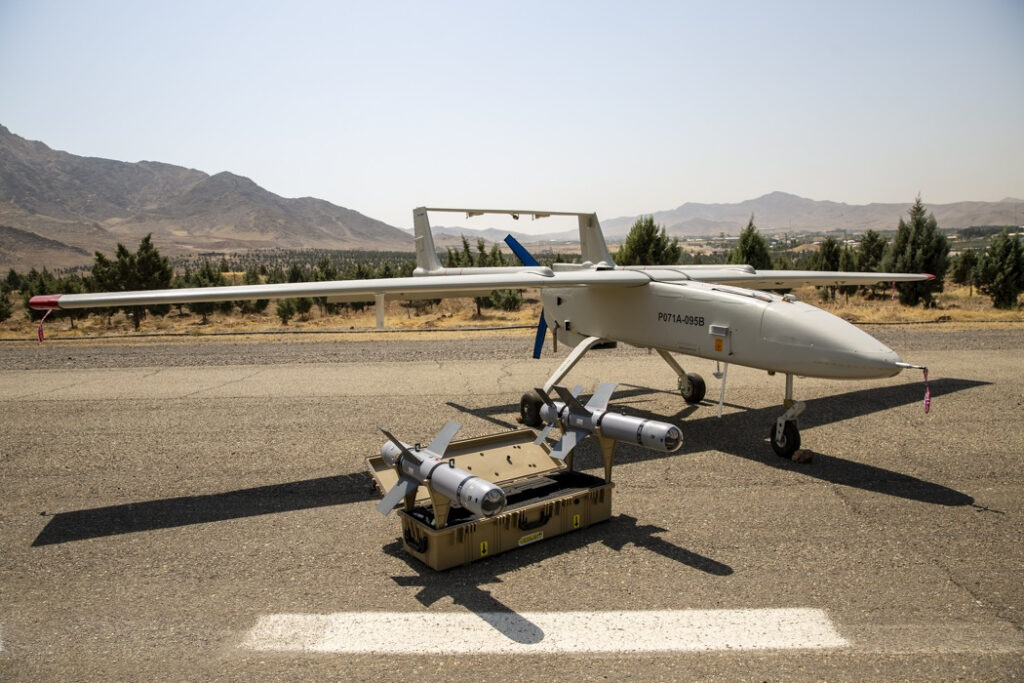
Another important UAV is the Mohajer-6, which performs reconnaissance and combat missions.
Unlike kamikaze drones, the Mohajer-6 can return to base after completing its mission.
Key Specifications
| Feature | Details |
|---|---|
| Role | Surveillance & attack |
| Speed | About 200 km/h |
| Endurance | Up to 12 hours |
| Weapons | Guided bombs or missiles |
The drone uses advanced cameras and sensors to monitor targets and transmit intelligence back to operators.
3. Shahed-129 Long-Range Combat UAV
The Shahed-129 is one of Iran’s most capable long-endurance drones.
It can stay airborne for extended periods, allowing it to conduct surveillance missions across large areas.
Key Specifications
| Feature | Details |
|---|---|
| Endurance | Around 24 hours |
| Range | About 1,700 km |
| Mission | Surveillance & strike |
| Weapons | Precision-guided munitions |
Because of its role and capabilities, it is sometimes compared to the American MQ-1 Predator.
Technology Inside Modern Military Drones
Modern drones are essentially flying computers equipped with advanced electronics.
Flight Control Systems
A flight controller acts as the drone’s brain, stabilizing the aircraft using gyroscopes and accelerometers.
GPS Navigation
Satellite navigation allows drones to follow pre-programmed routes across long distances.
Sensors and Cameras
Reconnaissance drones carry optical and infrared cameras that transmit real-time intelligence.
Communication Systems
Encrypted communication links allow operators to control drones remotely and receive live data.
For electronics enthusiasts, this combination of software, sensors, and communication systems is what makes modern UAV technology so fascinating.
While military UAVs are designed for surveillance and combat missions, consumer drones have also advanced rapidly in recent years. If you’re interested in affordable drone technology for photography or beginners, check out our guide to the best drones under $200.
Why Iran’s Drone Strategy Works
Iran’s drone program focuses on three key advantages.
Cost Efficiency
Drones are significantly cheaper than traditional aircraft and missiles.
Operational Flexibility
They can perform surveillance, reconnaissance, and strike missions.
Reduced Risk
Because drones are unmanned, they allow missions without risking pilots.
The Future of Drone Warfare
Many military analysts believe drones will play an even greater role in future conflicts.
Research from the Center for Strategic and International Studies suggests the next generation of drone technology may include:
- AI-powered navigation
- coordinated drone swarms
- advanced electronic warfare systems
- improved counter-drone defenses
Conclusion
Iran’s rise as a drone power shows how technological innovation can reshape military strategy. By investing in relatively affordable unmanned aircraft and developing domestic aerospace capabilities, the country has built a drone program that continues to attract global attention.
From loitering munitions like the Shahed-136 to long-endurance UAVs such as the Shahed-129, these systems demonstrate how drones are becoming an increasingly important part of modern military technology.
FAQs
-
Why are drones important in modern warfare?
Drones can perform reconnaissance and strike missions without risking pilots and often cost less than traditional aircraft.
-
What is a loitering munition?
A loitering munition is a drone that circles an area before striking a target and exploding on impact.
-
What makes Iran’s drones notable?
Iran focuses on relatively affordable drones that can be produced in larger numbers and deployed across long distances.